Histamine symptoms and foods
The information your body gives you after eating certain foods provides us with lots of information about what makes us feel good and bad. Just reducing these foods can potentially have a drastic impact on your symptoms (if they are histamine driven).
It can seem overwhelming at first, but it’s not as hard as you think. Many people have symptoms of histamine intolerance. When your body produces too much histamine, the high histamine levels in certain foods can cause symptom flares. Some foods are lower in histamine themselves, but they can cause a release of histamine in your body, which can cause worsening symptoms.
My view of this approach is to about gathering information to identify what triggers a reaction in you. Excluding foods is not fixing the problem so whilst avoiding certain foods is useful it is not the full picture.
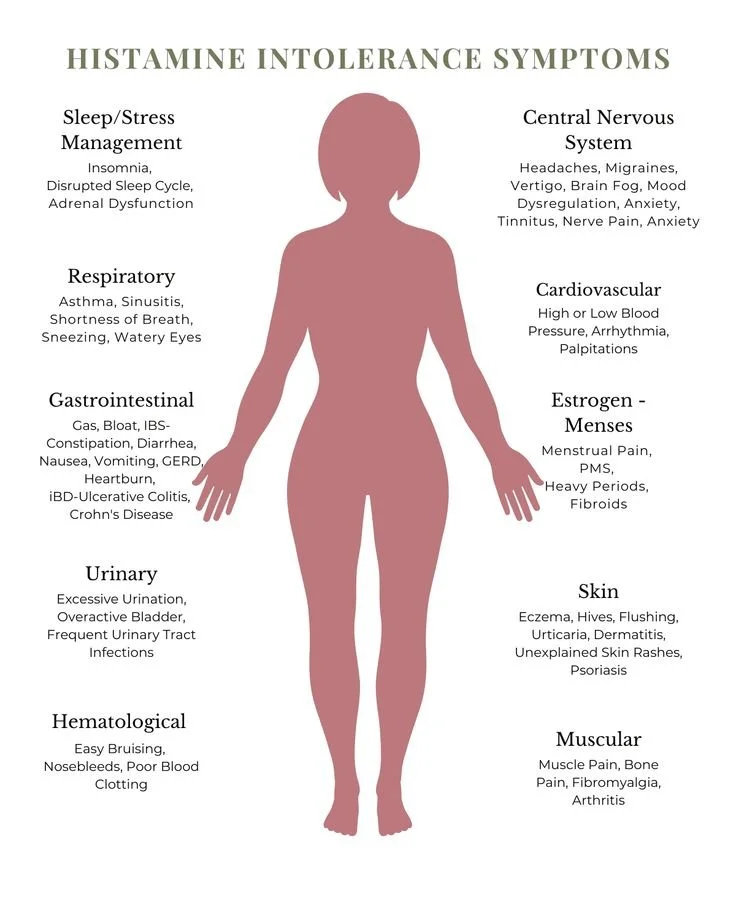
These are symptoms connected with histamine intolerance. Although you may be used to some of them they are NOT normal.
Have an experiment with yourself and try excluding these foods for a month and then introducing them one at a time. Notice how they make you feel.
LOW HISTAMINE DIET
The fresher, the better when it comes to low histamine levels in food. The goal is to try and avoid processed foods whenever possible. Some foods can be either high in histamine themselves or can cause a release of histamine in the body.
Here are some of the top offenders:
• Aged/fermented cheese like parmesan, blue cheese, brie, etc. Avoid any other hard, blue, or stinky cheeses.
• Alcohol, especially beer and wine.
• Artificial colors and flavoring
• Avocado
• Certain fruits: Kiwi, pineapple, papaya, strawberries, passionfruit, plum, and bananas. • Certain nuts – peanuts, walnuts, cashews.
• Certain seasonings – allspice, anise, cinnamon, chili powder, clove, curry powder, cayenne, msg, nutmeg, paprika.
• Chocolate
• Citrus - lemon, lime, grapefruit, orange.
• Dried fruit
• Eggplant
• Eggs, especially raw egg white.
• Fermented foods like kimchi, sauerkraut, tempeh, yogurt, kefir, sourdough, etc.
• Fish, especially if canned.
• Flavored milk
• Leftovers that have not been frozen
• Legumes – beans, chickpeas, soybeans, peanuts, etc. Especially if canned.
• Licorice
• Pickled/vinegar-containing foods like pickles, olives, mustard, ketchup, etc.
• Probiotics
• Processed or aged meat like hot dogs, sausage, deli meat, jerky, canned meat, etc.
• Shellfish
• Soured milk products like sour cream and buttermilk.
• Soy and soy products – soy sauce, soybeans, soy lecithin, tofu, etc.
• Spinach
• Squash
• Tomatoes
• Unpasteurized milk including goat and sheep.
• Wheat
Here are some foods that are low in histamine:
• Gluten-free grains like amaranth, arrowroot, buckwheat, millet, rice, quinoa, and more.
• Fresh meat that has not been aged.
• Salmon: Only fresh or flash-frozen within 30 minutes of catch.
• Non-citrus fruits like apples, blueberries, mangoes, peaches, pomegranates, and more. Avoid grapefruit, lemon, lime, and orange.
• Non-dairy milk like almond, coconut, or hemp.
• Fresh vegetables; avoid tomato, avocado, eggplant, squash, and spinach.
• Olive oil
• Coconut oil
• Almonds
• Potatoes
• Flax
• Chia
• If you tolerate milk: butter, ghee, cream, cream cheese, ricotta, mozzarella, and other soft cheeses that have not been aged or fermented.
I know this seems like a lot of information, but, the goal is not to eliminate these completely from your diet, it is a stepping stone in your wellness journey.